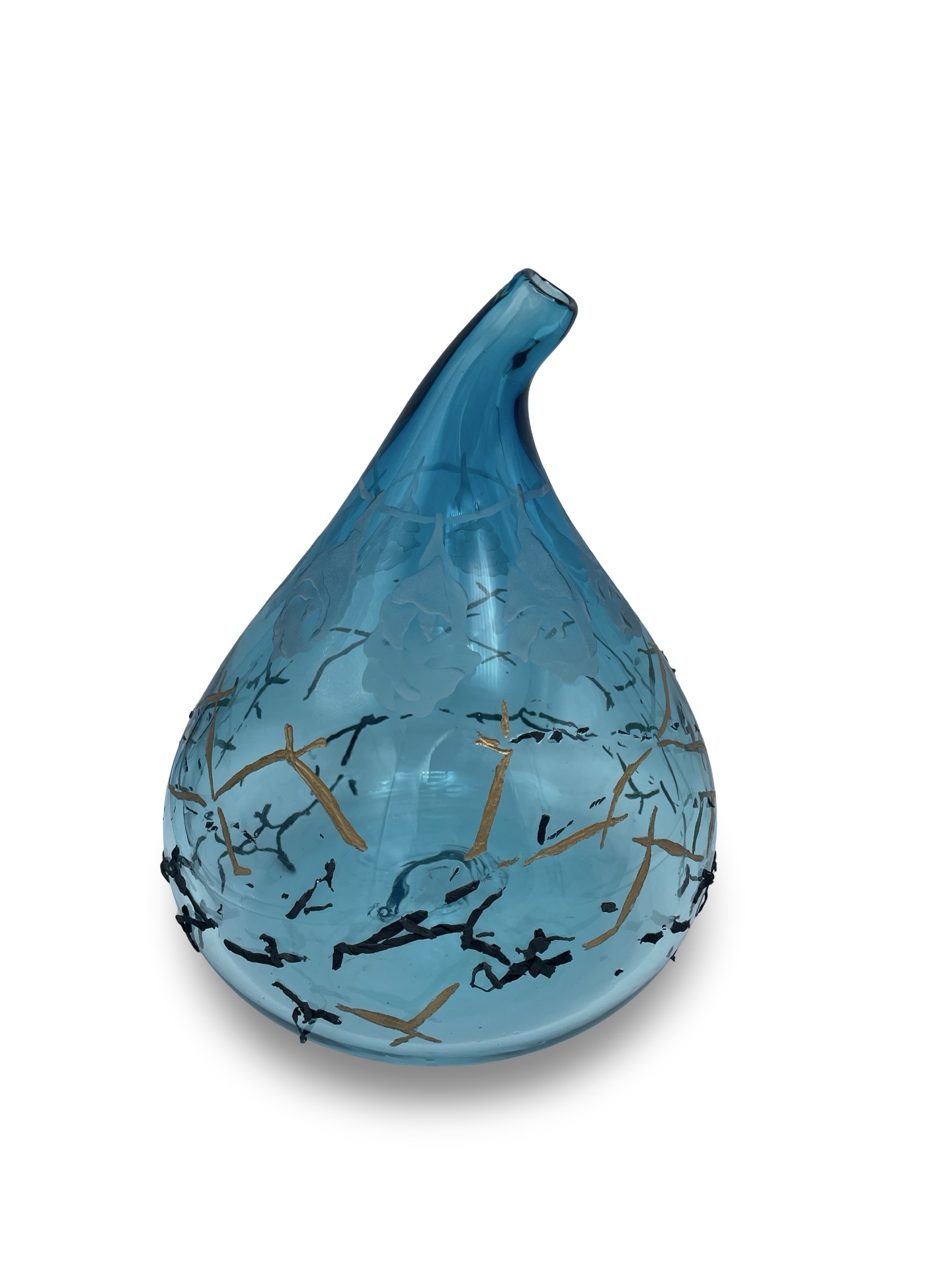
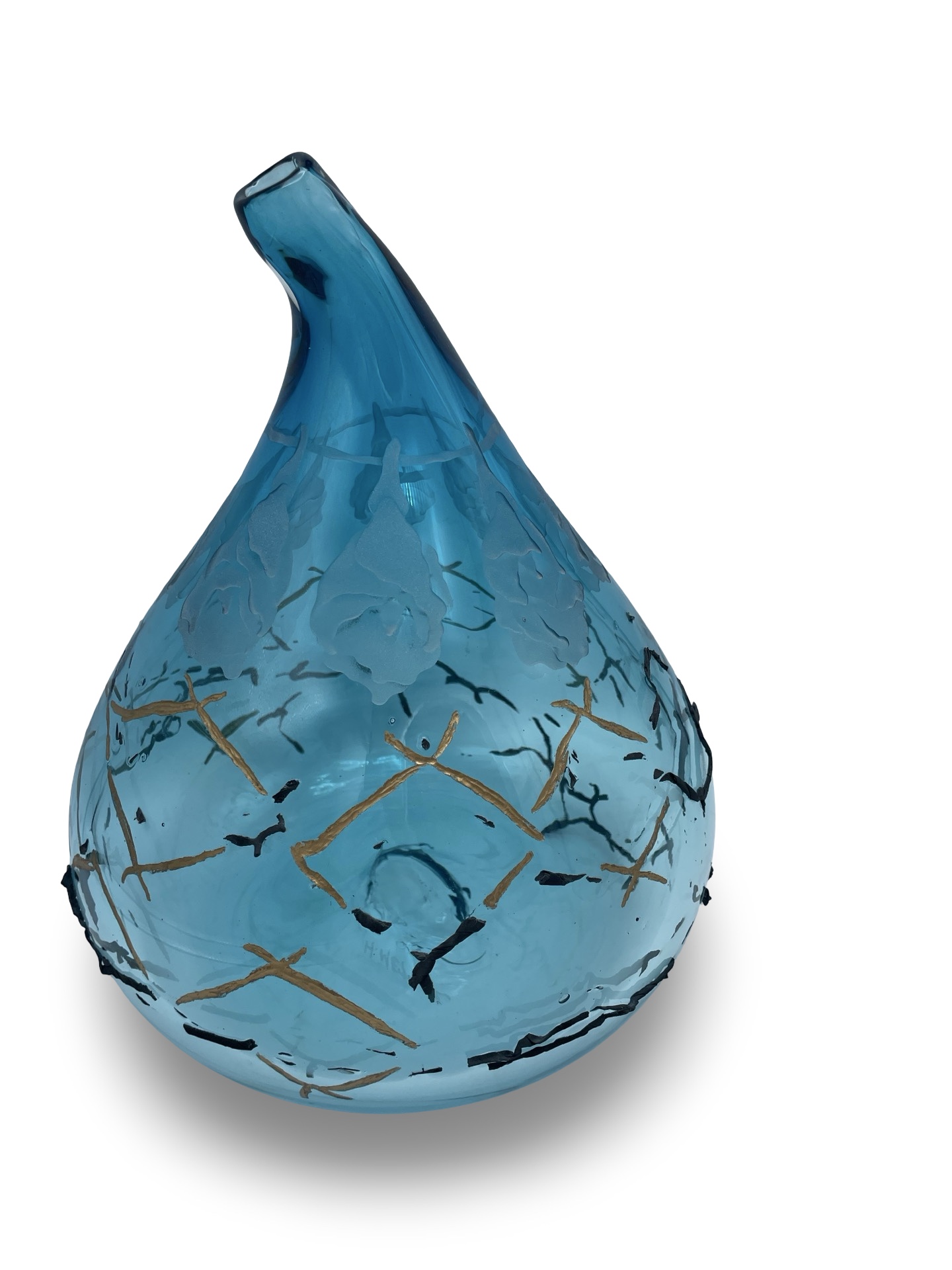
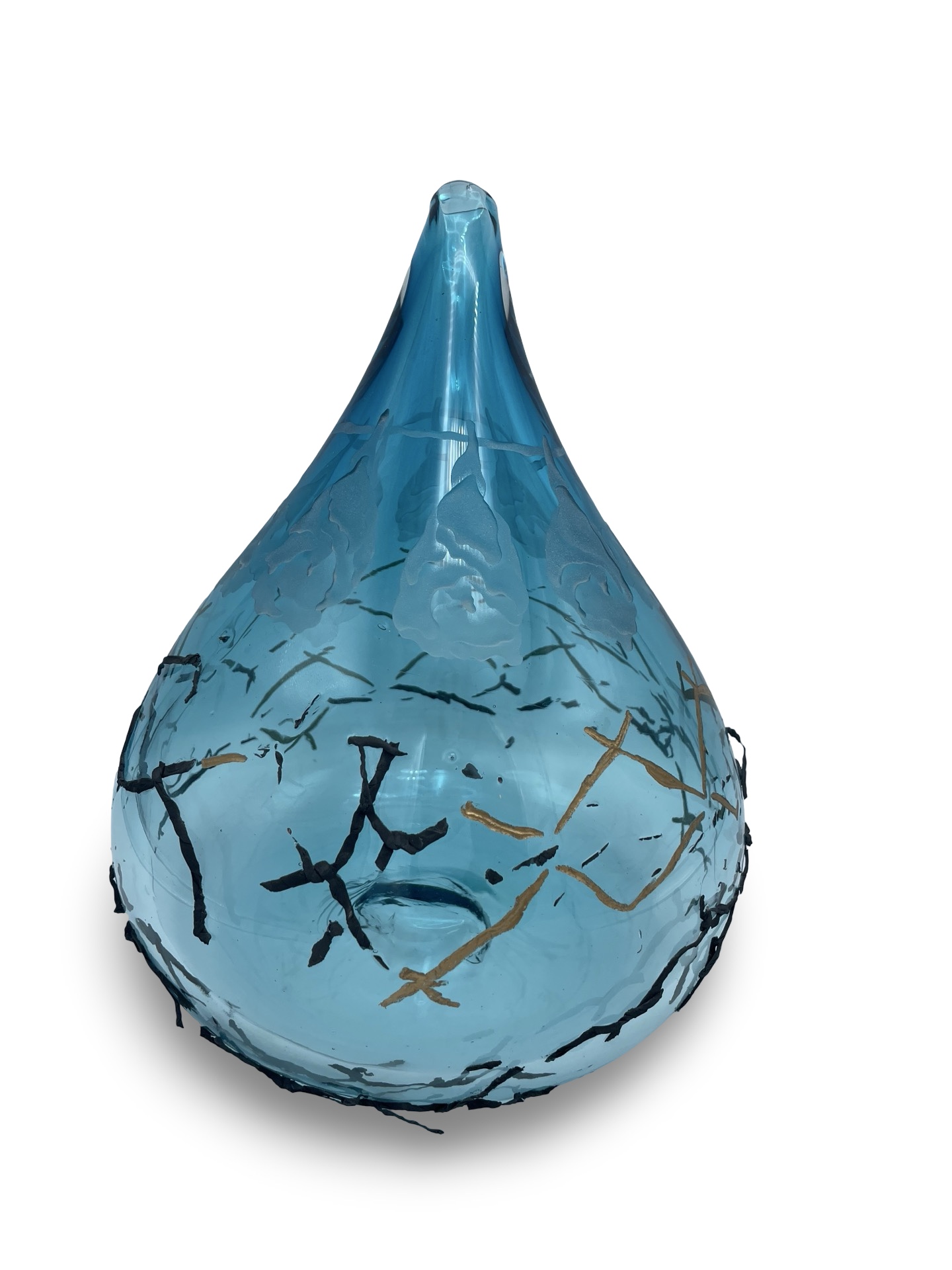
Ipu Wai Copper Weave w/Milo Lei Vessel, by Heather Mettler
ipu
1. n. The bottle gourd (Lagenaria siceraria, also L. vulgaris), a wide-spreading vine, with large-angled or lobed leaves, white, night blooming flowers, and smooth green and mottled or white fruits varying widely in shape and size. The plant is a native of tropical Asia or Africa. Hawaiians have long used gourds as receptacles, small gourds with thin walls to hold water or food, or for rattles for dances (the ipu has a fine tone, halfway between that of niu and laʻamia), larger ones with thin to thick walls to hold tapa and other articles or to serve as drums. Orientals cook and eat the white pulp of green fruits. Hawaiians have distinguished between a kind with bitter pulp, used medicinally, and a kind with nonbitter pulp. (wehewehe.org)
wai
1. nvs. Water, liquid or liquor of any kind other than sea water (see ex., koni), juice, sap, honey; liquids discharged from the body, as blood, semen; color, dye, pattern; to flow, like water, fluid. Wai o ke kāne, semen. Wai o ka wahine, menstruation or other discharge. Wai o kaunu, thrilling discharges of love. Komo wai ē ʻia, foreign liquid has entered [of a child conceived by other than the married husband]. I wai noʻu, give me some water [let’s have a contest or fight]. Wai ihola ke koko, the blood flowed. Wai o ka lehua, lehua flower honey. Hoʻokahi wai ʻo ka like, the sameness of a single dye [unity]. E wai kahi ka pono i mānalo, better sweeten with a single color [unity to find serenity]. Ua hewa i ka wai, great quantities of water. Hoʻolana i ka wai ke ola, life floats on water [near death]. Paʻihi ʻoe lā, lilo i ka wai, ʻaʻohe ʻike iho i ka hoa mua, well-adorned are you, carried to water [wealth], not knowing former friends. (PPN wai.)
milo
1. n. A tree to 12 m high (Thespesia populnea), found on coasts of the eastern tropics; used for shade, the wood for calabashes, other parts of the tree in many ways, as for medicine, dye, oil, gum. It is related to the hau and resembles it somewhat. (Neal 563–4.) (PPN milo.)
lei
1. n. Lei, garland, wreath; necklace of flowers, leaves, shells, ivory, feathers, or paper, given as a symbol of affection; beads; any ornament worn around the head or about the neck; to wear a lei; special song presenting a lei; crown; ring around a drake’s neck; yoke, as for joining draft animals, especially oxen. Fig., a beloved child, wife, husband, sweetheart, younger sibling or child, so called because a beloved child was carried on the shoulders, with its legs draped down on both sides of the bearer like a lei. Cf. lei palaoa. Kāna lei, his lei (to give away or sell). Kona lei, his lei (to wear). Leilani (name), royal child, heavenly lei. ʻUhene ahahana kaʻu lei naʻu ia (song), oh joy, oh boy, she’s my darling. hoʻo.lei To put a lei on oneself or on someone else; to crown. (PPN lei.)