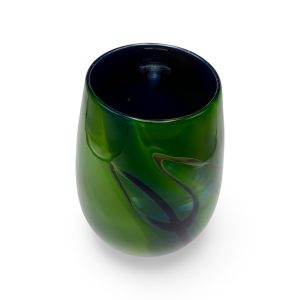
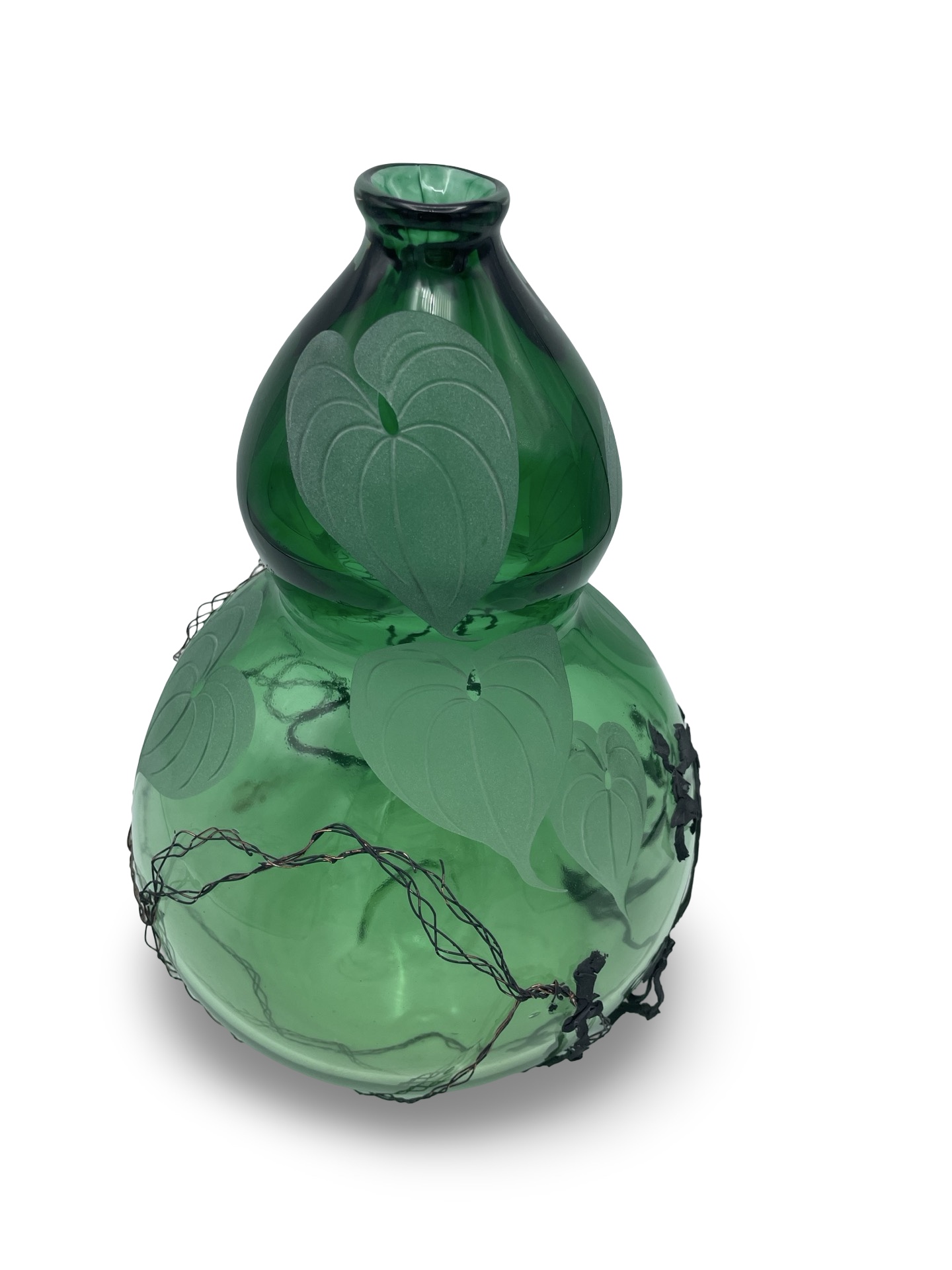
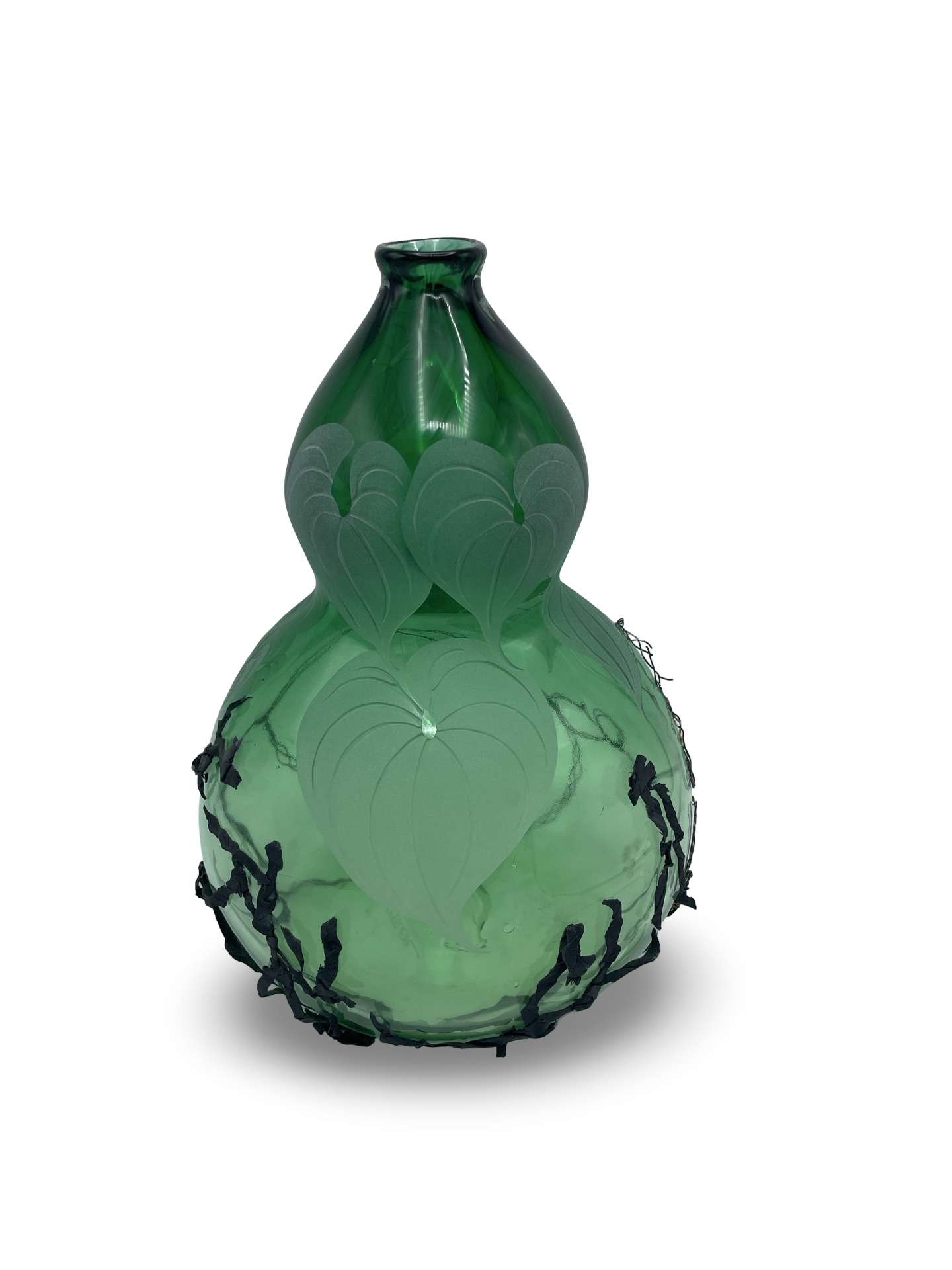
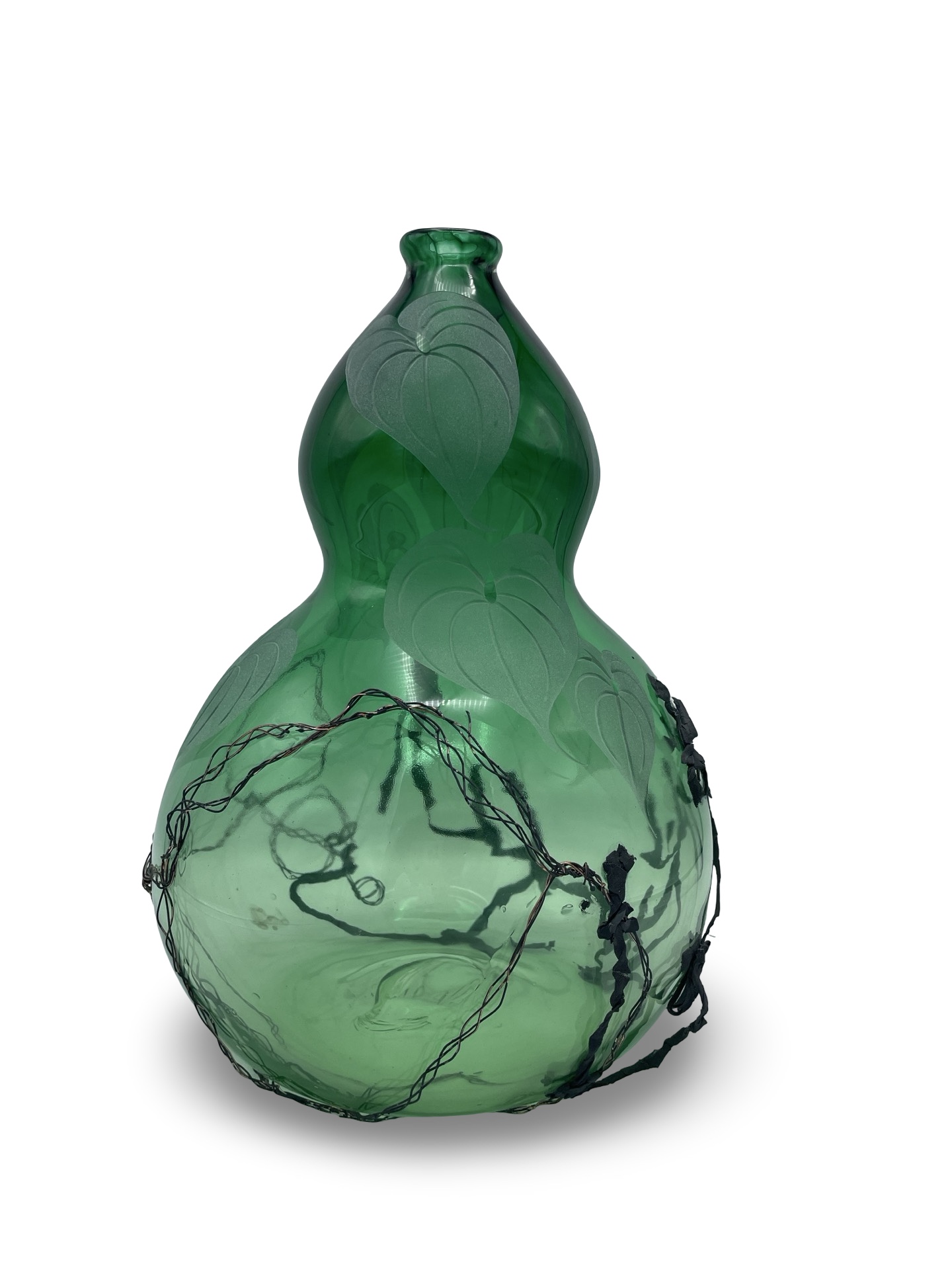
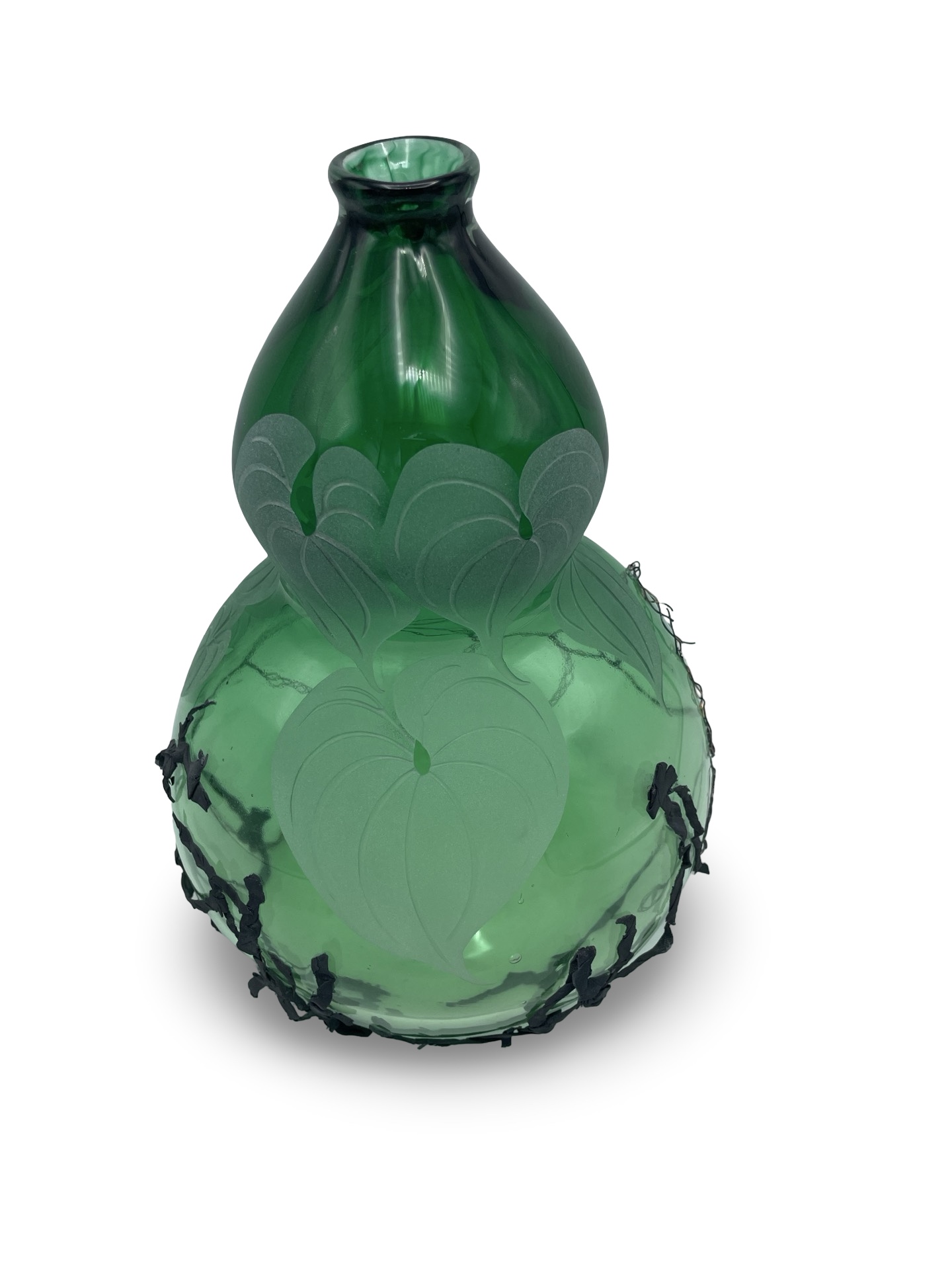
Ipu Heke Copper Weave w/Uhi Leaves Vessel, by Heather Mettler
ipu
1. n. The bottle gourd (Lagenaria siceraria, also L. vulgaris), a wide-spreading vine, with large-angled or lobed leaves, white, night blooming flowers, and smooth green and mottled or white fruits varying widely in shape and size. The plant is a native of tropical Asia or Africa. Hawaiians have long used gourds as receptacles, small gourds with thin walls to hold water or food, or for rattles for dances (the ipu has a fine tone, halfway between that of niu and laʻamia), larger ones with thin to thick walls to hold tapa and other articles or to serve as drums. Orientals cook and eat the white pulp of green fruits. Hawaiians have distinguished between a kind with bitter pulp, used medicinally, and a kind with nonbitter pulp. (wehewehe.org)
heke
2. n. Top gourd in a hula gourd drum. Cf. ʻolo 1.
uhi
3. n. The yam (Dioscorea alata), from southeast Asia, a climber with square stems, heart-shaped leaves, and large, edible, underground tubers. The plant is widely distributed through islands of the Pacific, where it is commonly grown for food. (HP 166–172, Neal 230.) Also pālau, ulehihi. In the past botanists have applied the name uhi incorrectly to the hoi kuahiwi. (PPN ʻufi.)