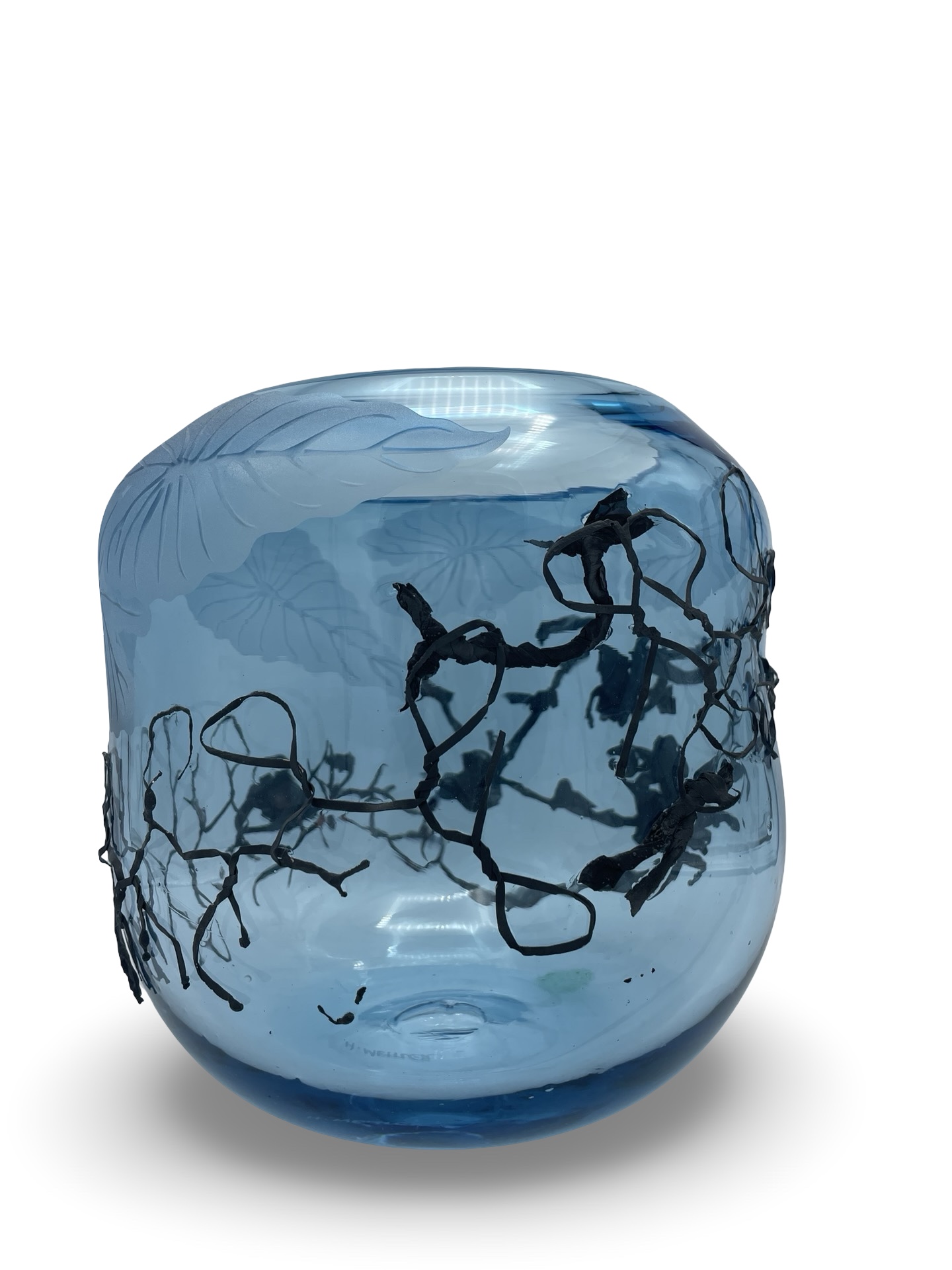
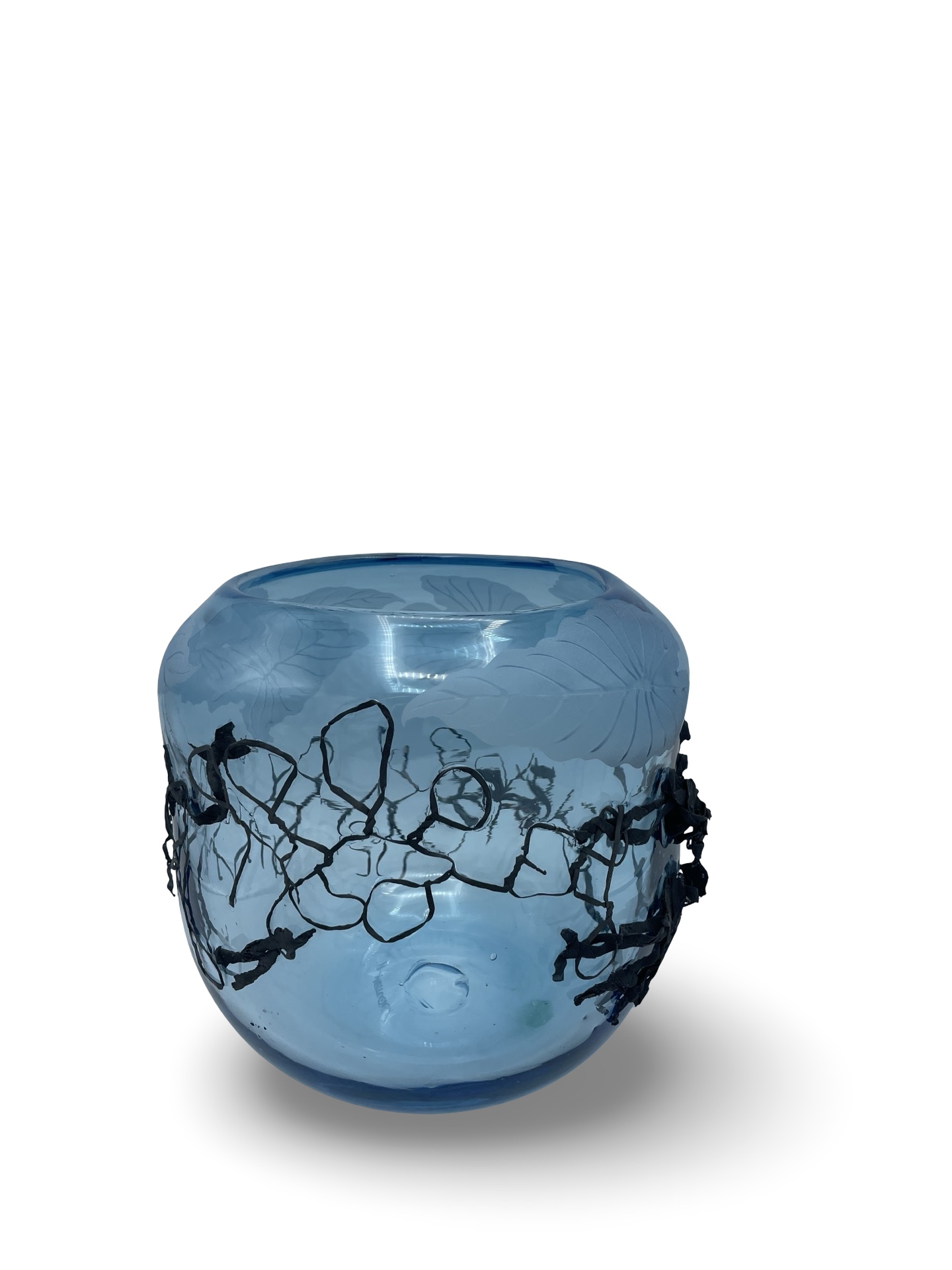

Ipu ʻUmeke Copper Weave w/Kalo Leaves Calabash Bowl by Heather Mettler
ipu
1. n. The bottle gourd (Lagenaria siceraria, also L. vulgaris), a wide-spreading vine, with large-angled or lobed leaves, white, night blooming flowers, and smooth green and mottled or white fruits varying widely in shape and size. The plant is a native of tropical Asia or Africa. Hawaiians have long used gourds as receptacles, small gourds with thin walls to hold water or food, or for rattles for dances (the ipu has a fine tone, halfway between that of niu and laʻamia), larger ones with thin to thick walls to hold tapa and other articles or to serve as drums. Orientals cook and eat the white pulp of green fruits. Hawaiians have distinguished between a kind with bitter pulp, used medicinally, and a kind with nonbitter pulp. (wehewehe.org)
ʻumeke
n. Bowl, calabash, circular vessel, as of wood or gourd. ʻUmeke kāʻeo, a well-filled calabash [a well-filled mind]. ʻUmeke pala ʻole, calabash without a dab [empty bowl, empty mind]. hoʻo.ʻumeke, hō.ʻumeke To assume the shape of a bowl; to assume the shape of fruit, to bear fruit. Fig., to have enough to eat. E pua ana ka ʻōhiʻa ʻai a hōʻumeke i ka malama o Hinaiaʻeleʻele (Kep. 93), the mountain apple blooms and fruits form in the month of Hinaiaʻeleʻele. (PPN kumete.)
kalo
1. n. Taro (Colocasia esculenta), a kind of aroid cultivated since ancient times for food, spreading widely from the tropics of the Old World. In Hawaiʻi, taro has been the staple from earliest times to the present, and here its culture developed greatly, including more than 300 forms. All parts of the plant are eaten, its starchy root principally as poi, and its leaves as lūʻau. It is a perennial herb consisting of a cluster of long-stemmed, heart-shaped leaves rising 30 cm. or more from underground tubers or corms. (Neal 157–60.) Specifically, kalo is the name of the first taro growing from the planted stalk; names of generations as listed for Hawaiʻi Island (Kep. 153) are (1) kalo: see ex., palili, (2) ʻohā or muʻu, (3) ʻaʻae or ʻae, (4) ʻōnihinihi, (5) kokole, (6) pahūpahū. Kō mākou kalo kanu o ka ʻāina (saying), our planted taro of the land [proud and affectionate reference to a chief]. (PPN talo.)